
Works on Paper
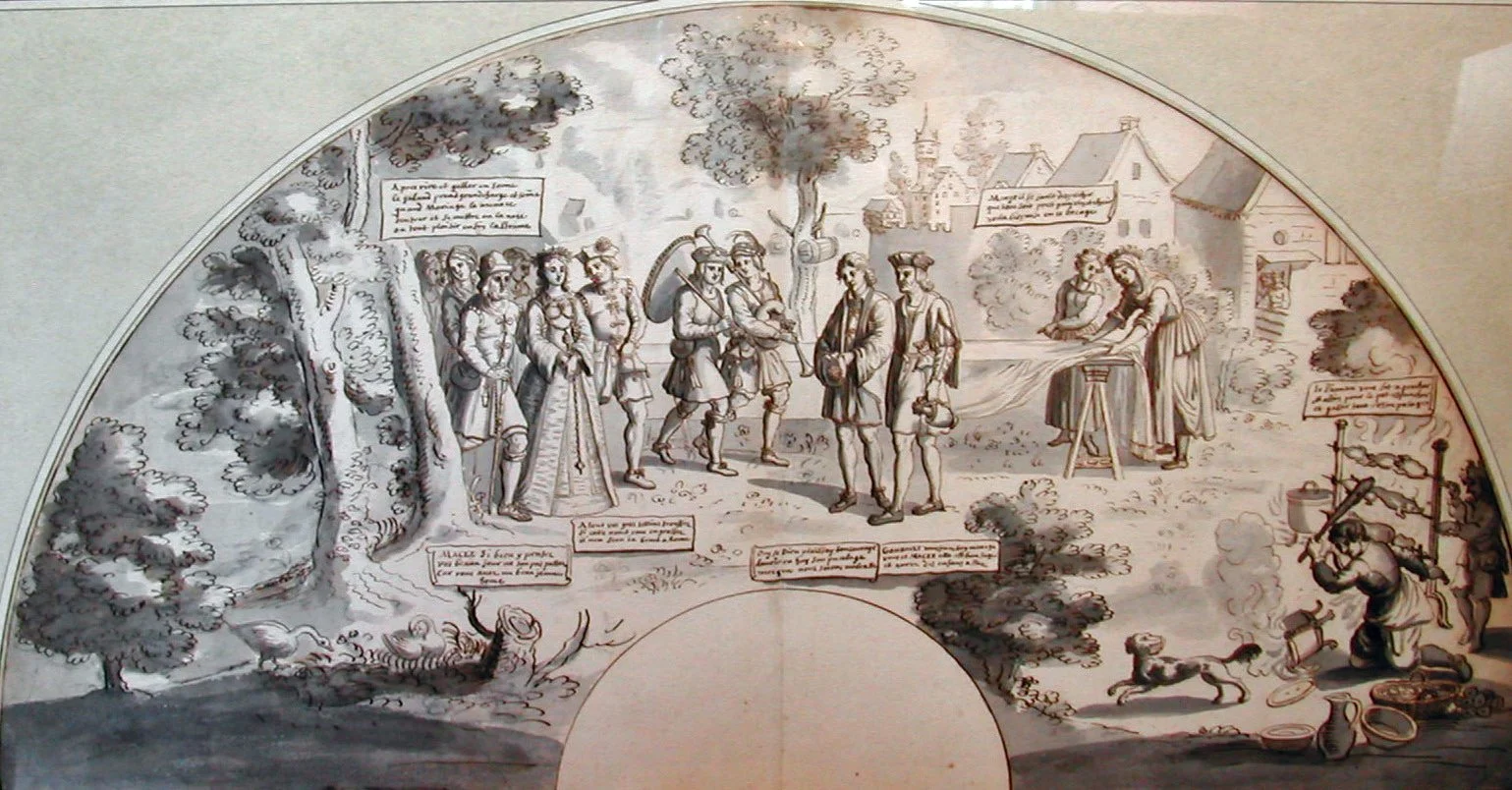
French School, late 16th/early 17th century
Design for a fan: The wedding of Gombault and Macee
Brown ink and gray wash
12 ½ x 24 inches (32 x 61 cm)
The story of Gombault and Macee recounting the loves of a shepherd and shepherdess was an early example of the pastoral romance form of French literature in the 16th century.
The composition derives from the sixth in a series of eight engravings titled l’Histoire Plaisante de la vie Pastorale et la Fin d’Icelle, by Jean Leclerc III (d. 1623) published in Paris around 1585. A copy is in the Louvre Cabinet des Estampes. The sixth plate bears the title Mariage de Gombault et Macé, préparatifs du repas.
The lively and accurate depiction of details of 16th century peasant life lead to the popularity of the scenes which were woven as tapestries in Bruges between 1590 and 1650 and subsequently at Aubusson and Tours.
In the cartouches are excepts from 16th century texts:
« Apres rire et galler en somme le galand prend gran charge et some quand mariage le menace dentrer et se mettre en la noce ou tout plaisir enfin lassomme »
« Margot il se fault despescher que tout soit prest pain vin et chair voila c’est ou je en ce bocage »
« MACEE Si bien y pensez vos beaux jour ne son pas passer car vous avez un beau jeune homme »
« A tout vos gros tettins trousser si cette nuit vous engrossez il n’en sera ia bruit a Rome »
« Ou y se Dieu plais iay bon courage davoir en huy son pucelage mecque nous soyons embrasse »
« GOMBAULT vous ferez boy mesnage vous et MACEE elle est bien sage et aurez des enfans assez »
« Le Diantre vous fit aprocher Mastin pour le pot espancher et gaster tout vostre potage »